

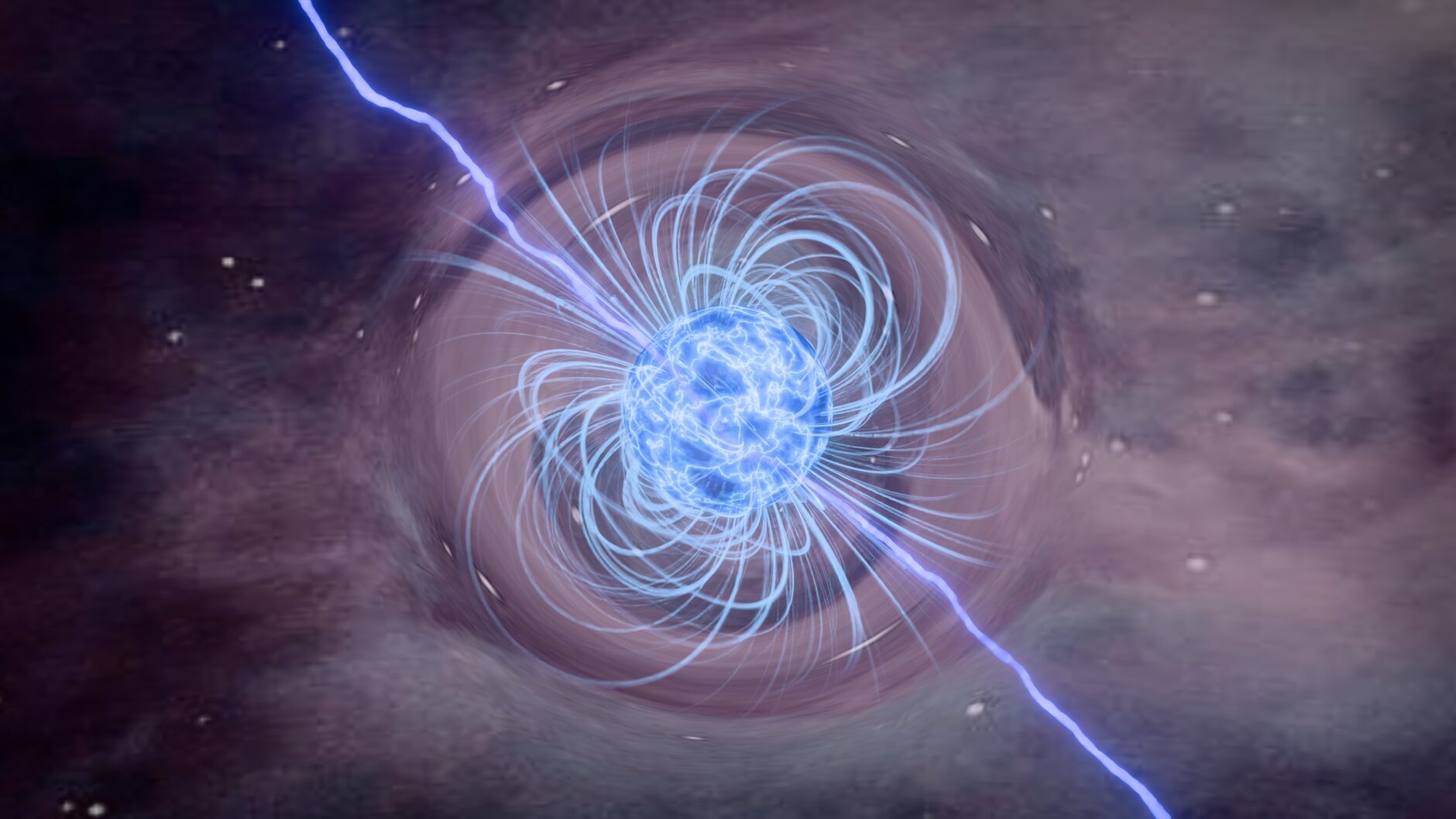
Enceladus electromagnetic wake has been traced at least 504,000 kilometres downstream through Saturn’s magnetosphere, showcasing its intriguing behavior.
What is Enceladus?
Enceladus is one of Saturn’s most intriguing moons, measuring only 504 kilometres across, which is approximately half the length of Great Britain. Despite its small size, Enceladus has garnered significant attention from scientists due to its unique geological features and potential for hosting life. The moon is primarily composed of water ice and is known for its active geysers that eject water vapor and ice particles from its southern polar region.
This activity contributes to the formation of the Enceladus electromagnetic wake, a phenomenon that has been studied extensively in recent years. A groundbreaking study conducted in 2026 traced the moon’s Alfvén-wave wake at least 504,000 kilometres downstream through Saturn’s magnetosphere, revealing the extensive reach of its electromagnetic influence. This finding highlights the complex interactions between Enceladus and its surrounding environment, and it raises questions about the moon’s potential for harboring life.
Additionally, Enceladus is believed to have a subsurface ocean beneath its icy crust, which may provide the necessary conditions for life to thrive. The ongoing research into the moon’s characteristics continues to unveil its mysteries, making it a focal point for future exploration.
Understanding Saturn’s Magnetosphere
The study of Saturn’s magnetosphere presents a complex and fascinating picture of the interactions between celestial bodies. Saturn’s magnetic field, which is one of the strongest in the solar system, plays a crucial role in shaping the environment around its moons, particularly Enceladus. This icy moon is not only geologically active but also generates a significant electromagnetic wake, as evidenced by its interaction with the planet’s magnetosphere.
Researchers have found that the Enceladus electromagnetic wake extends remarkably over vast distances. This electromagnetic phenomenon is primarily caused by charged particles ejected from Enceladus, which interact with Saturn’s magnetic field. The wake traces a path that extends at least 504,000 kilometers downstream, showcasing the extensive reach of Enceladus’s influence within the magnetosphere.
Understanding this intricate relationship is vital for comprehending how Saturn’s magnetosphere operates. The dynamics involved include:
- The interaction of plasma with magnetic fields.
- Effects on nearby satellites and rings.
- Potential implications for astrobiology, given Enceladus’s subsurface ocean.
Thus, the study of the Enceladus electromagnetic wake not only enhances our knowledge of magnetospheric physics but also enriches our understanding of the potential for life beyond Earth.
The Significance of Alfvén Waves
The discovery of Alfvén waves associated with Enceladus is a remarkable advancement in our understanding of celestial interactions within Saturn’s magnetosphere. These electromagnetic waves are generated when charged particles, influenced by magnetic fields, oscillate at specific frequencies. The presence of Alfvén waves indicates that Enceladus is not merely an icy moon but a significant player in the dynamics of its surrounding environment.
Researchers have traced the Enceladus electromagnetic wake extending over 504,000 kilometres downstream, an impressive distance that showcases the moon’s impact on Saturn’s magnetosphere. This phenomenon suggests that Enceladus contributes to the overall magnetic field environment, influencing not only itself but also its larger planetary system.
The significance of these findings lies in the potential for further exploration of similar interactions among other celestial bodies. Understanding Alfvén waves helps scientists decipher the complex electromagnetic landscapes that govern the behavior of moons, planets, and their atmospheres. Moreover, this discovery opens new avenues for studying icy moons as potential habitats for life, as the energy provided by these waves may play a role in sustaining subsurface oceans.
Recent Discoveries in Space Science
Recent advancements in space science have shed light on the fascinating phenomena surrounding Enceladus, particularly its electromagnetic wake. This small moon of Saturn has become a focal point for researchers aiming to understand its complex interactions within the planet’s magnetosphere.
A groundbreaking study from 2026 revealed that Enceladus, measuring just 504 kilometres in diameter, generates an electromagnetic Alfvén-wave wake that extends a staggering 504,000 kilometres downstream. This distance surpasses even the Moon’s orbit around Saturn, highlighting the moon’s significant influence on its celestial environment.
Key findings from the study include:
- Electromagnetic Dynamics: The Alfvén waves produced by Enceladus contribute to the unique electromagnetic properties of Saturn’s magnetosphere.
- Scientific Implications: Understanding this electromagnetic wake may provide insights into the moon’s subsurface ocean and its potential for harboring life.
- Future Exploration: The discoveries pave the way for upcoming missions aimed at further investigating Enceladus and its intriguing features.
These recent discoveries emphasize the importance of Enceladus in the broader field of planetary science and enhance our understanding of the dynamics within Saturn’s complex system.
How Enceladus Affects Saturn’s Environment
Enceladus, despite its small size, has a profound impact on Saturn’s surrounding environment. The moon is a source of significant electromagnetic activity due to its unique features, including its geysers that eject water vapor and ice particles. This activity plays a crucial role in shaping Saturn’s magnetosphere.
The discovery of the Enceladus electromagnetic wake has revealed how the moon influences the magnetic field and plasma environment around Saturn. As particles from Enceladus are expelled into space, they interact with Saturn’s magnetic field, creating a complex interplay that can extend for hundreds of thousands of kilometers.
One of the most fascinating aspects of this phenomenon is the way the electromagnetic Alfvén waves propagate through the magnetosphere. These waves carry energy and information across vast distances, affecting not only Saturn but also its other moons and rings. Researchers have identified that the effects of this wake can be traced for at least 504,000 kilometers downstream, illustrating the extensive reach of Enceladus’s influence.
Understanding the Enceladus electromagnetic wake offers valuable insights into the dynamics of Saturn’s environment, providing a clearer picture of how celestial bodies interact within a planetary system.
Future Research on Enceladus
Future research on Enceladus is set to expand our understanding of this intriguing moon and its electromagnetic wake. As scientists continue to unravel the complexities of Saturn’s magnetosphere, the data collected from past missions provides a solid foundation for upcoming studies.
One of the primary areas of focus will be the investigation of the relationship between the electromagnetic wake of Enceladus and the surrounding plasma environment. Researchers aim to explore how this wake interacts with Saturn’s magnetic field and how it influences the dynamics of charged particles in the magnetosphere.
Additionally, studies will delve into the potential implications of the electromagnetic wake for astrobiology. The interaction between the moon’s subsurface ocean and its surface could offer clues about habitability in extraterrestrial environments.
Future missions, possibly involving advanced technology such as more sensitive instruments or dedicated spacecraft, may be necessary to gather additional data. This effort could illuminate not just the mechanics of Enceladus’ electromagnetic wake but also its role in shaping the larger context of Saturn’s environmental systems.
In conclusion, the ongoing research promises to enhance our understanding of Enceladus and its significance in the solar system.
The recent findings related to the Enceladus electromagnetic wake have reshaped our understanding of this intriguing moon. Researchers are now investigating how the Enceladus electromagnetic wake interacts with Saturn’s magnetic field.
Photo by Nicola Narracci on Pexels
Where this came from
Related reading
- Policy dynamism in India: Is it the best change ever?
- Apple AI news: Worst Siri AI Release Raises Concerns
- Crazy Taxi movie: Exciting news for Sega fans!