

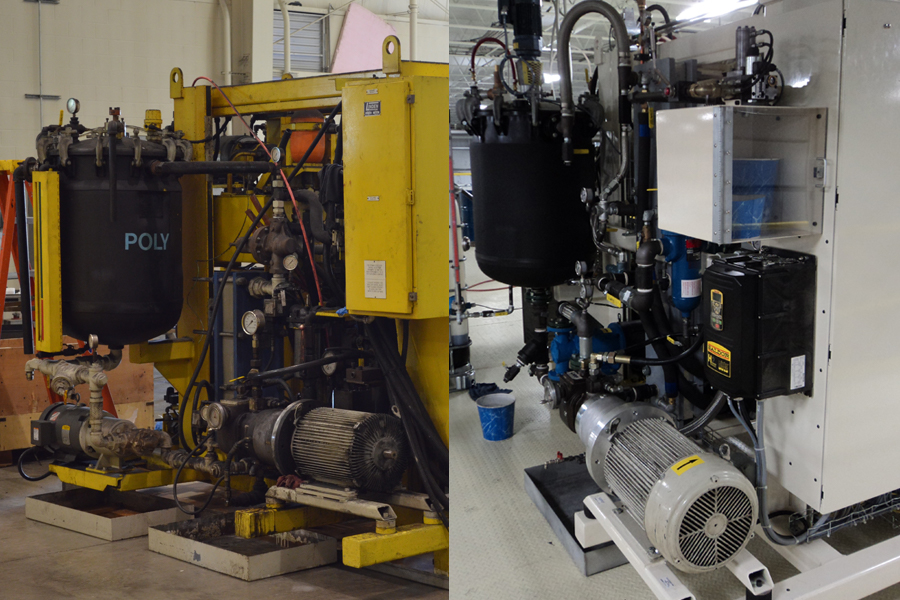
In modern manufacturing environments, consistent material handling is essential for quality output, and the use of Urethane Dispensing Equipment has become a critical part of achieving controlled, repeatable, and efficient production results. Industries that rely on foams, coatings, adhesives, and elastomers depend heavily on precise mixing and dispensing processes to ensure product durability and performance. As production demands grow, manufacturers increasingly prioritize systems that offer accuracy, stability, and reduced material waste while maintaining high throughput.
What is Urethane Dispensing Equipment?
What is urethane dispensing equipment in industrial manufacturing? It refers to specialized machinery designed to measure, mix, and dispense polyurethane-based materials in controlled ratios. These systems ensure that chemical components are combined accurately before application, resulting in consistent curing and material performance.
Urethane materials are widely used due to their versatility, and they require careful handling because even minor deviations in ratio or temperature can impact product quality. Dispensing systems help maintain these precise conditions, making them essential in industries such as automotive, construction, electronics, and furniture manufacturing.
How Does Urethane Dispensing Equipment Work?
How do precision dispensing systems manage complex chemical processes effectively? The operation typically begins with two or more raw material components stored in separate tanks. These materials are then pumped through controlled lines into a mixing chamber.
Inside the system, the components are combined under strict ratio control. Advanced sensors monitor flow rates, pressure, and temperature to ensure accuracy. Once properly mixed, the material is dispensed through a nozzle or application head onto molds, surfaces, or production lines.
The process is carefully automated to reduce human error. Operators can set parameters through control interfaces, allowing adjustments based on production requirements. This automation ensures consistent output across large-scale manufacturing runs.
Why Precision Matters in Urethane Dispensing?
Why is precision so important in urethane-based production processes? The chemical reaction between polyurethane components is highly sensitive. Even slight inconsistencies in mixing ratios can lead to defects such as weak bonding, uneven texture, or incomplete curing.
Precision ensures that every batch of material performs consistently. It also improves product durability and reduces waste caused by defective output. In industries where safety and performance are critical, such as automotive parts or insulation materials, precision directly impacts reliability and compliance with quality standards.
Moreover, precise dispensing reduces overuse of raw materials, helping manufacturers lower production costs while maintaining efficiency.
Key Components of Modern Dispensing Systems?
What components make up a high-performance dispensing setup? Modern systems are built with several integrated parts that work together to ensure accuracy and reliability.
Storage tanks hold the raw materials under controlled temperature conditions. Pumps regulate the flow of each component, ensuring consistent delivery. Mixing units combine materials at precise ratios, while dispensing heads apply the final mixture accurately.
Control systems are equally important. They include programmable interfaces that allow operators to adjust flow rates, mixing ratios, and timing sequences. Sensors and monitoring devices continuously track performance to prevent errors during production.
Each component plays a vital role in ensuring that the entire system operates smoothly and efficiently.
Applications Across Industries?
Where is urethane dispensing technology most commonly used in today’s industries? Its applications are diverse due to the flexibility of polyurethane materials.
In the automotive industry, it is used for sealing, gasketing, and structural components. Construction companies rely on it for insulation panels, adhesives, and protective coatings. Electronics manufacturers use it for potting and encapsulation to protect sensitive components from moisture and vibration.
Furniture and bedding industries also utilize urethane systems for foam production, ensuring comfort and durability in finished products. Even aerospace applications depend on precision dispensing for lightweight structural components and insulation systems.
The versatility of these systems makes them indispensable across multiple manufacturing sectors.
Benefits of Automated Dispensing Systems?
What advantages do automated dispensing systems offer to manufacturers? One of the most significant benefits is improved consistency. Automated systems eliminate variations caused by manual mixing or application.
Another major advantage is efficiency. Automated processes significantly reduce production time while increasing output capacity. This allows manufacturers to meet high-demand requirements without sacrificing quality.
Waste reduction is also a key benefit. Since materials are dispensed in precise quantities, there is minimal excess usage. This leads to cost savings and more sustainable production practices.
Additionally, automation enhances workplace safety by minimizing direct human contact with reactive chemicals.
Challenges in Urethane Dispensing Processes?
What challenges do manufacturers face when working with urethane systems? Despite their advantages, these systems require careful maintenance and monitoring.
One common challenge is material sensitivity. Polyurethane components can react to environmental factors such as moisture and temperature, affecting performance. This requires strict storage and handling conditions.
System calibration is another important factor. If equipment is not properly calibrated, mixing ratios can become inconsistent, leading to defective products.
Maintenance is also crucial. Regular cleaning of mixing heads and flow lines is necessary to prevent clogging or contamination. Without proper upkeep, system efficiency can decline over time.
Future Trends in Urethane Dispensing Technology?
How is urethane dispensing technology expected to evolve in the future? The industry is moving toward greater automation and digital integration. Smart sensors and AI-driven control systems are increasingly being used to monitor production in real time.
Predictive maintenance is another emerging trend. Instead of reacting to equipment failures, systems will be able to predict issues before they occur, reducing downtime and improving productivity.
Energy efficiency is also becoming a priority. New designs focus on reducing power consumption while maintaining high performance levels. Additionally, improved material compatibility is expanding the range of applications for dispensing systems.
As manufacturing continues to advance, these innovations will play a key role in shaping more efficient and intelligent production environments.
How to Choose the Right System for Production Needs?
How can manufacturers select the most suitable dispensing system for their operations? The decision depends on several factors including production volume, material type, and required precision level.
For high-volume production, automated systems with advanced control features are typically preferred. For smaller or specialized applications, more compact and flexible systems may be sufficient.
It is also important to consider maintenance requirements, system scalability, and compatibility with existing production lines. Manufacturers should evaluate long-term operational costs rather than focusing only on initial investment.
Selecting the right system ensures improved efficiency, reduced downtime, and better product quality over time.
Conclusion
In today’s competitive manufacturing landscape, precision and efficiency are essential for success. Urethane-based production processes demand highly controlled environments where consistency is maintained at every stage. Advanced dispensing systems provide the accuracy, automation, and reliability needed to meet these demands.
As industries continue to evolve, these systems will remain a cornerstone of modern production, supporting innovation while improving quality, sustainability, and operational performance across multiple sectors.