

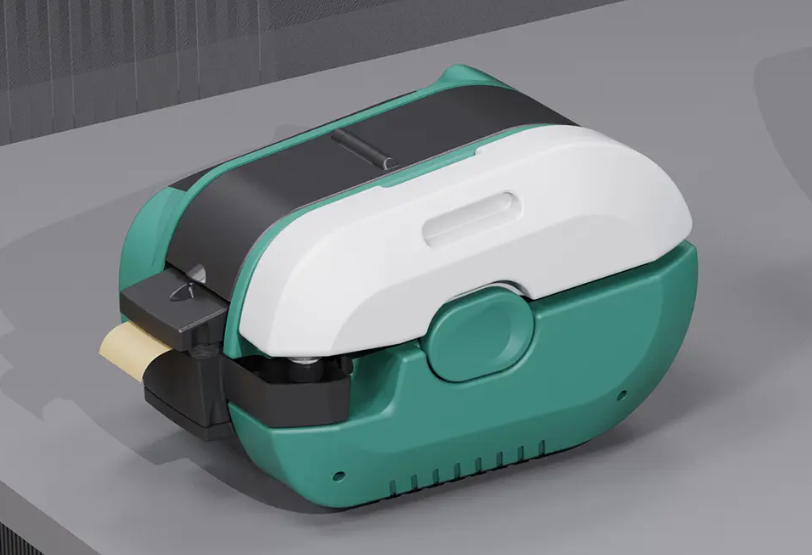
The case for an automatic tape machine is usually made in terms of speed. That framing is misleading. A machine that dispenses tape in under two seconds does not help a packing station where the real bottleneck is finding the right box or scanning an order. The value of an automatic tape machine shows up in a narrower, more specific place: eliminating the small, repeated decisions an operator makes on every carton.
This article examines where that value is real, where it is overstated, and what to verify before purchasing.
What “automatic” means in practice
On a water-activated system, an automatic tape machine feeds kraft paper tape, wets the starch adhesive, cuts to a preset length, and presents the strip ready to apply — all triggered by a button press rather than a manual lever pull. Some units go further with sensor operation, dispensing tape when a hand or carton passes a sensor.
The operational difference from a manual dispenser is not just seconds saved. It is the removal of judgment from the task. An operator sealing a mixed run of cartons no longer estimates how much tape each box needs; the machine dispenses a set length. Over a shift, that removes hundreds of micro-decisions and the tape waste that accompanies them.
The volume threshold is real, but it is not the only factor
Teams often ask what daily volume justifies an automatic machine. From working with packing operations, the honest answer involves two numbers, not one.
The first is cartons per day. Broadly, operations sealing under roughly 100 cartons daily rarely recover the cost of automation; a manual lever dispenser such as the NT-800 handles that pace without power or installation. Once a team is consistently sealing several hundred cartons a day across one or more stations, the math shifts.
The second number matters more and is often ignored: cartons per operator per hour during peak periods. A station that runs slowly most of the week but hits a hard throughput ceiling during dispatch windows benefits from automation even at modest weekly volume, because the constraint is the peak, not the average. Buying on average volume alone can leave a team under-equipped exactly when it matters.
Preset lengths and the tape waste nobody measures
Tape consumption is one of the least-tracked costs on a packing line. Operators pulling plastic tape by hand tend to over-pull for security. An automatic tape machine with adjustable cut lengths — commonly spanning roughly 15 cm to 210 cm — standardizes usage per carton size. On a line sealing several hundred cartons daily, trimming even a modest excess from each strip compounds into a measurable annual reduction in material spend.
Units with a tape length detector extend this further by measuring a carton and calculating the optimal strip, which is genuinely useful for operations with varied box sizes rather than uniform order profiles. For uniform cartons, preset length buttons cover the need at lower cost.
The maintenance reality of water-activated systems
Automation does not remove maintenance; it concentrates it. The moistening brush remains the critical component. Starch adhesive left to dry hardens the brush, wetting becomes uneven, and adhesion drops — typically presenting as tape lifting at carton corners a day after sealing, when the shipment may already have left the building.
A short end-of-shift routine prevents nearly all of it: drain and rinse the water tank, wipe the brush, and check the cutting blade weekly. Heated tanks with a 1-liter capacity support consistent wetting through a shift without frequent refilling, and filtered water reduces mineral buildup in hard-water areas. Buyers should confirm blades are easy to replace and spare parts are stocked; a machine idled for a week over a backordered blade costs more than the blade ever will.
Noise and station layout
An automatic machine runs continuously through a shift, so operating noise matters for the people standing beside it. Units rated below 70 dB are easier to place on a busy packing floor without disrupting the workspace. Sensor-operated models dispense around 60 m/min on some units, though real output depends on tape width, carton size, and how the station is arranged — a machine placed at the wrong height or angle will underperform its specification regardless of rated speed.
Five checks before ordering
Daily and peak-hour carton volume — evaluate both, not the weekly average alone.
Tape compatibility — confirm supported roll width and diameter, and test with a full roll of your own tape, not just the sample.
Functions used — preset lengths, automatic feed, or sensor activation; avoid paying for features the workflow will not touch.
Maintenance access — water refill, brush cleaning, blade replacement, spare parts availability.
Supplier support — warranty, technical support, and OEM/ODM options. Airpowerpak (YJNPACK) offers these customization services alongside its dispenser range, including logo printing, body color, and function adjustments, which is worth discussing early with distributors sourcing for resale.
Where automation earns its place
An automatic tape machine fits best in e-commerce fulfillment, third-party logistics warehouses with multiple packing stations, export packing where tamper evidence is specified, and cold-chain operations where plastic tape can lose adhesion at low temperatures. For low-volume operations sealing a handful of boxes weekly, a handheld or manual dispenser is sufficient, and automation is overcapitalization.
The most dependable decision method remains a trial on your own carton mix: run a machine through a normal shift and observe where operators hesitate or wait. That reveals more about the right automatic tape machine than any comparison table.
What You Need to Know
- An automatic tape machine eliminates small, repeated decisions made by an operator on every carton, rather than just improving speed.
- Automatic tape machines can dispense tape based on preset lengths, which means operators no longer have to estimate the amount of tape needed, leading to reduced waste.
- Operations generally sealing under 100 cartons daily typically do not recover the cost of an automatic machine, while those sealing several hundred cartons daily may benefit from automation.
- The maintenance of automatic tape machines is concentrated around keeping the moistening brush functional, requiring regular cleaning and checks to avoid decreased adhesion.
- Before purchasing an automatic tape machine, teams should evaluate both daily and peak-hour carton volumes, tape compatibility, and maintenance access.
- Automatic tape machines are best suited for high-volume operations such as e-commerce fulfillment and logistics warehouses, while low-volume operations may still use manual dispensers.