

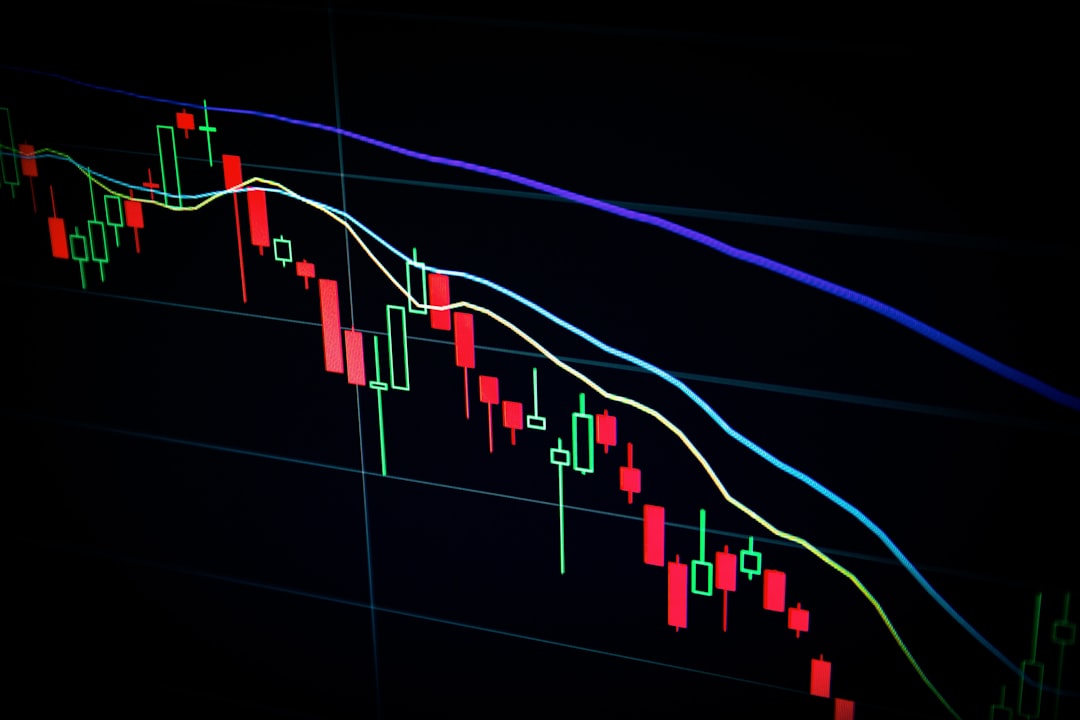
Every trading day in India begins and ends with two numbers that the entire financial community watches with great attention. The INDEXBOM: SENSEX, which tracks the top thirty companies listed on the Bombay Stock Exchange, and the Nifty 50, which monitors the fifty largest companies on the National Stock Exchange, together serve as the pulse of the country’s economic and corporate health. These benchmarks are not mere statistics — they shape sentiment, drive decisions, and reflect the collective mood of millions of investors and institutions who participate in the market daily.
Why Benchmark Indices Matter Beyond the Trading Screen
Many people believe that the market indices have no place in the life of a small investor. On the contrary, not only market traders but also a number of institutions like pension funds, insurance companies, provident fund managers, mutual funds, and many others use the indices as a reference for measuring the performance of their schemes. If a fund manager says that her scheme has performed better than the benchmark, it means that it has fetched better returns than the benchmark index over the same period of time.
For individual investors, these indices act as a reference point by means of which they can understand the movement in the market. If on a particular day the market has moved down by 300 points, it could very well be a decline of less than half a per cent if we compare the new index level and the previous one. Interpreting the trends in the market is an important skill every individual who wishes to take part in the Indian equity market.
The Construction Logic Behind Thirty and Fifty Stocks
There is a certain logic the indices follow while picking up companies to comprise the index. Both kinds of indices on the Indian markets function according to the strict regulations determined by the competent authority of the stock exchange. Factors like capitalisation, liquidity of the stock, sectorial diversification, the company’s financial health, and the history of listing of the stock also play a role in determining its eligibility. Moreover, indices are reviewed, and the stocks not qualifying the conditions are replaced by those that do.
This allows the investors to know the trend of the Indian corporate world at any point of time by observing the movement of the index. The same reason explains why the value of the index increases or decreases. The free-float methodology while calculating the market capitalization of the company is followed by both the indices. This means that the promoter’s shares, strategic stakes and government ownership are excluded from the equation in order to arrive at the figure of a company’s market valuation that actually determines the movement of the index.
Sectoral Composition and Its Implications for Investors
It is interesting to note the sectoral composition of the indices, because it represents the Indian economy as we see it. Financial services sector comprises the largest portion within the bodies of both the indices. This clearly shows that the banking industry, NBFCs and insurance companies together constitute the major part of the organized corporate sector in India. The IT industry also comprises a large portion in the market indices, due to the fact that a lot of its revenue comes from overseas clients.
This distribution has a special significance to the investors who have the majority of their money in passive index funds. The performance of the two major sectors determines the performance of the index fund. If the two sectors do well, the index shows spectacular returns. However, any negative development in terms of performance of the two sectors would lead the index to underperform in comparison to other actively managed funds.
Reading Index Movements With Greater Intelligence
The value of the index at any given point in time is created by the collective movement of the stocks comprising it, which in turn depends on the free-float market capitalisation. Therefore, a large market cap stock has more weight on the index value than a smaller one. This is a crucial point for the investors as they should keep in mind that sudden movements in a few big stocks could affect the value of the index, even if the majority of the stocks comprising it have shown little or no movement.
An intelligent investor, who keeps a constant track of the trends of the stock market, uses these facts to determine the overall health of the market. The movement of the market is not defined by how much the index has moved up or down. A lot of people get disappointed or excited on a single news about a stock, without analysing how the stock fits in with the overall scenario. A day on which the market index has moved up by a considerable amount but the majority of the stocks listed have declined in value is a much healthier indicator of the market’s performance than a day when the index has moved down slightly but the majority of the stocks have moved ahead.
What You Need to Know
- The SENSEX tracks the top thirty companies on the Bombay Stock Exchange, while the Nifty 50 monitors the fifty largest companies on the National Stock Exchange.
- Market indices serve as a reference for various institutions, including pension funds and mutual funds, to measure their performance against benchmark returns.
- The selection of companies for the indices is based on factors such as market capitalization, liquidity, sector diversification, and the company’s financial health.
- The financial services sector and the IT industry represent the largest portions of the indices, significantly impacting their overall performance.
- The index value is influenced more by large market cap stocks, meaning that significant movements in these stocks can disproportionately affect the index value.