

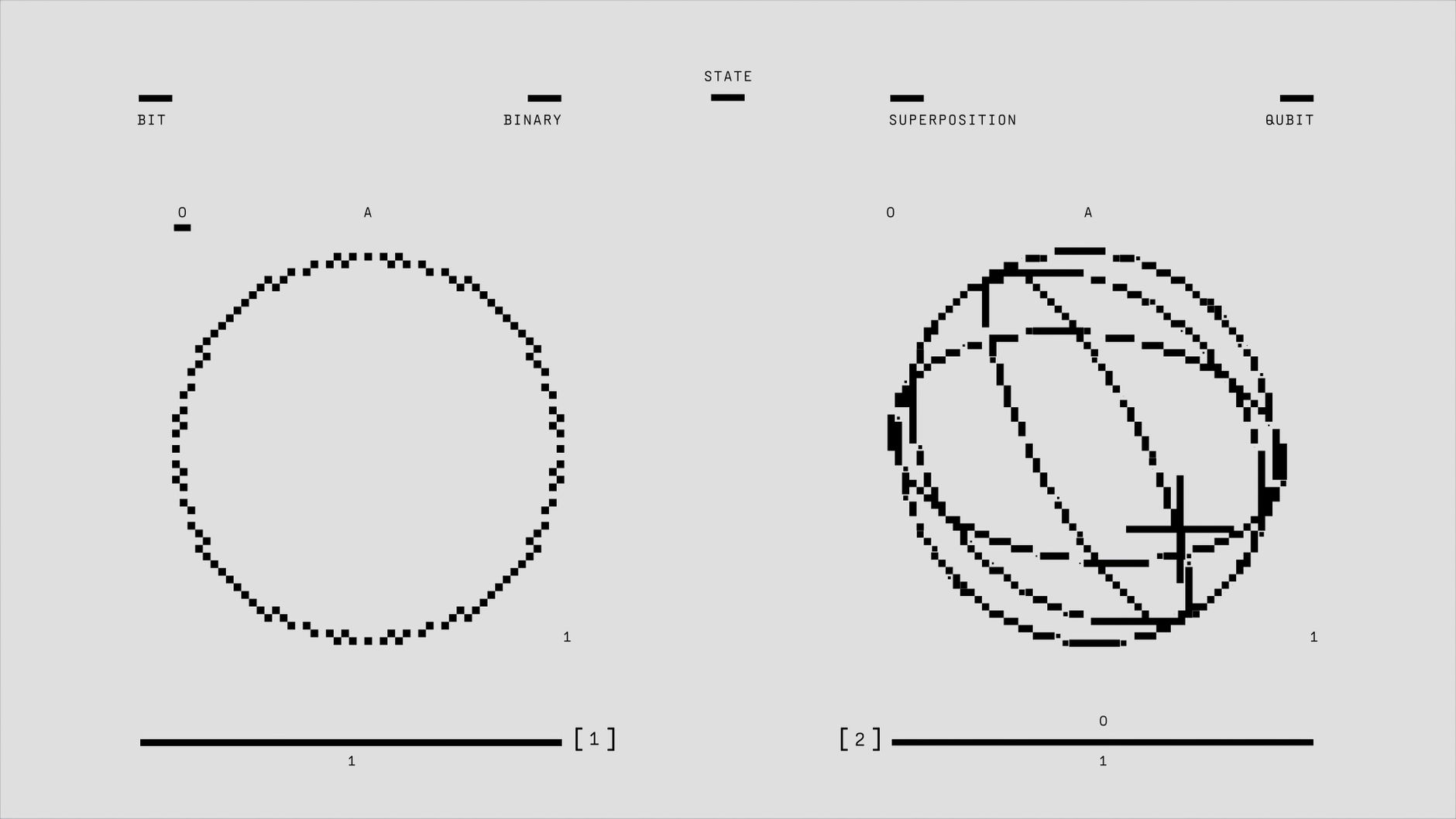
quantum prediction 1931 has just come to life, shedding light on contemporary scientific advancements. This remarkable connection between past theories and present discoveries opens up new avenues for research and understanding.
Understanding Quantum Predictions
Quantum predictions have long fascinated scientists and researchers, particularly those interested in the foundational aspects of quantum mechanics. In 1931, a significant prediction emerged that would later prove to be remarkably prescient. This prediction offered insights into the behavior of particles at the quantum level and suggested phenomena that would not be observed until decades later.
The principles underlying this early quantum prediction have had a profound impact on various fields of science and technology. Understanding these predictions requires a grasp of several key concepts:
- Wave-Particle Duality: The idea that particles, such as electrons, exhibit both wave-like and particle-like properties.
- Superposition: The principle that particles can exist in multiple states simultaneously until measured.
- Entanglement: A phenomenon where particles become interconnected, such that the state of one particle instantly influences the state of another, regardless of distance.
As researchers continue to explore these concepts, the relevance of the quantum prediction from 1931 becomes increasingly clear. Today, it serves as a foundational element in advancements such as quantum computing and quantum cryptography, showcasing the enduring legacy of early theoretical work in shaping our understanding of the quantum realm.
Historical Context of 1931
The year 1931 marked a significant period in the evolution of quantum theory, a field that was rapidly gaining traction among physicists. During this time, foundational concepts were being developed, which would later lead to groundbreaking implications in various scientific domains. The term quantum prediction was starting to become more prevalent, as researchers sought to explore the probabilistic nature of quantum mechanics.
Key figures like Werner Heisenberg and Erwin Schrödinger were pivotal in advancing theoretical frameworks that would redefine our understanding of subatomic particles. Their works laid the groundwork for what would become known as the Copenhagen interpretation of quantum mechanics. This interpretation emphasized the role of observation in determining the state of a quantum system, a notion that was both revolutionary and controversial.
Additionally, the 1931 landscape was influenced by the ongoing debates surrounding determinism versus indeterminism in physics. As scientists grappled with these concepts, the implications of quantum predictions began to resonate beyond theoretical discussions, setting the stage for future technological advancements.
In retrospect, the events of 1931 were not merely academic; they were a prelude to the profound impact quantum mechanics would have on various fields, including computing and cryptography, underscoring the enduring significance of those early predictions.
Modern Implications of Quantum Theories
The advancements in quantum theories since 1931 have led to numerous modern implications that continue to influence various fields. As scientists delve deeper into the principles established nearly a century ago, the relevance of quantum prediction 1931 has become increasingly apparent.
One of the most significant areas impacted by these theories is technology. Innovations in quantum computing are paving the way for faster processing capabilities and solving complex problems that were once deemed impossible. These advancements have the potential to revolutionize industries such as finance, healthcare, and logistics.
Another area experiencing profound changes is telecommunications. Quantum theories have introduced concepts that enhance data security through quantum encryption. This technology promises to protect sensitive information from cyber threats, as it leverages the principles of quantum mechanics to ensure that data remains secure.
Furthermore, the integration of quantum predictions into material science is leading to the development of new materials with unique properties. These materials can be tailored for specific applications, ranging from more efficient solar panels to stronger and lighter components in aerospace engineering.
In summary, the echoes of quantum prediction 1931 resonate today, showcasing the enduring impact of early 20th-century scientific insights on contemporary technological advancements.
Key Figures Behind the Prediction
The year 1931 marked a significant turning point in the realm of quantum physics, largely due to the contributions of several key figures who shaped the understanding and interpretation of quantum prediction. Their groundbreaking work laid the foundation for future advancements in the field.
Among these pivotal figures was Werner Heisenberg, who developed the uncertainty principle, fundamentally altering how scientists perceive the behavior of particles. His insights into quantum mechanics allowed for the formulation of predictions that encapsulated the inherent unpredictability of subatomic phenomena.
Another notable contributor was Erwin Schrödinger, whose wave equation provided a mathematical framework for understanding quantum states. Schrödinger’s work was instrumental in refining quantum prediction, as it introduced the concept of probability waves, illustrating how particles exist in multiple states until observed.
Additionally, Niels Bohr played a crucial role in the development of quantum theory, advocating for the complementarity principle, which emphasized the dual wave-particle nature of light and matter. This principle was vital for interpreting experimental outcomes and validating quantum predictions made during this era.
These scientists, along with others, established a rich dialogue that not only advanced theoretical physics but also set the stage for the practical implications of quantum prediction, influencing technologies we rely on today.
Recent Developments in Quantum Science
In recent years, the field of quantum science has witnessed significant advancements that resonate with the quantum prediction of 1931. Researchers are now exploring the foundational concepts that emerged from this early work, leading to new technological breakthroughs and theoretical insights.
One of the most exciting developments is the rise of quantum computing. This technology aims to harness the principles of quantum mechanics to perform calculations at unprecedented speeds. As scientists delve deeper into quantum algorithms, many are finding connections to theories proposed nearly a century ago, highlighting the enduring relevance of the quantum prediction 1931.
Additionally, innovations in quantum cryptography are reshaping the landscape of secure communication. By utilizing the principles of superposition and entanglement, researchers are developing systems that promise unbreakable encryption, ensuring data privacy in an increasingly digital world.
Furthermore, experimental physicists are conducting groundbreaking research in quantum materials, which could lead to the development of next-generation electronic devices. These materials exhibit unique properties that were once only theorized, validating the foresight of early quantum predictions.
As we continue to unlock the mysteries of quantum mechanics, the insights gained from past predictions remain instrumental in guiding future research and applications across various scientific fields.
Future of Quantum Research
The future of quantum research holds exciting possibilities as scientists build on the foundations laid by the groundbreaking quantum prediction 1931. As we delve deeper into the complexities of quantum mechanics, researchers are exploring new frontiers that could revolutionize technology and our understanding of the universe.
One primary area of focus is the development of quantum computing. With the ability to process information at unprecedented speeds, this technology promises to tackle problems that are currently unsolvable by classical computers. Furthermore, advancements in quantum cryptography could offer unparalleled security in communications, making data transmission more reliable.
Another emerging field is quantum sensing, which utilizes quantum phenomena to achieve higher precision measurements. This could have significant implications in various sectors, including healthcare, environmental monitoring, and navigation systems.
As researchers continue to investigate the implications of quantum theories, they are also addressing fundamental questions about the nature of reality. The ongoing dialogue surrounding quantum predictions encourages collaboration across disciplines, fostering innovation and creativity.
In conclusion, the legacy of the quantum prediction from 1931 is not merely historical; it serves as a catalyst for future exploration. The impact of these theories will resonate for generations, shaping not only scientific inquiry but also technological advancements that can transform everyday life.
The groundbreaking work on quantum prediction 1931 has laid the foundation for many advancements in modern physics. Researchers continue to explore the implications of quantum prediction 1931, revealing insights that challenge our understanding of reality.
Photo by Google DeepMind on Pexels
Read the original
Related reading
- NVS-03 satellite decision: What’s the right pyro valve choice?
- OPPO Find X10 Battery: The Best Proven Performance Boost
- AI commitment for US research: Proven $2.4 Billion Investment