

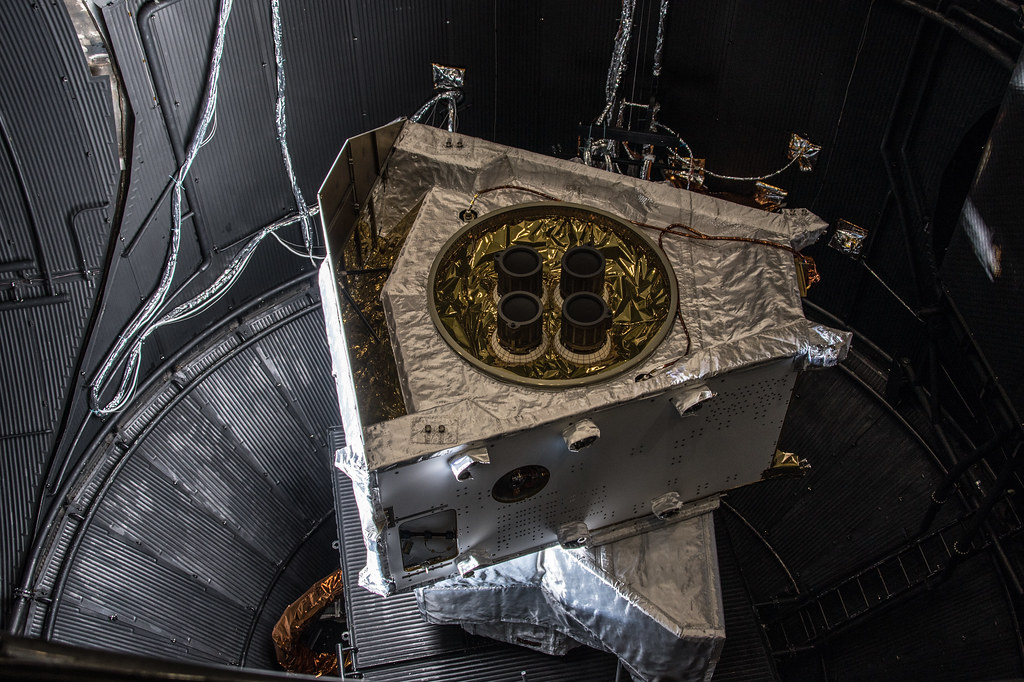
The BepiColombo Mercury mission has successfully achieved its goal of entering orbit around Mercury, marking a pivotal moment in space exploration.
Overview of the BepiColombo Mission
The BepiColombo Mercury mission has achieved a significant milestone with its successful insertion into Mercury’s orbit, marking a new chapter in planetary exploration. This ambitious collaboration between the European Space Agency (ESA) and the Japan Aerospace Exploration Agency (JAXA) aims to unravel the mysteries of the solar system’s innermost planet.
BepiColombo is equipped with two scientific orbiters: the Mercury Planetary Orbiter (MPO) and the Mercury Magnetospheric Orbiter (MMO). Each orbiter has specific objectives that include:
- Studying Mercury’s surface and geological history
- Analyzing its magnetic field and exosphere
- Investigating the planet’s extreme environment
This mission holds the potential to provide unprecedented insights into Mercury’s formation and its role within the solar system.
Significance of Mercury Orbit
The successful insertion of the BepiColombo Mercury mission into orbit marks a pivotal moment in planetary exploration. Understanding Mercury, the innermost planet of our solar system, offers insights into the formation and evolution of terrestrial bodies. This mission is significant for several reasons:
- Scientific Discovery: BepiColombo will provide unprecedented data about Mercury’s geology, atmosphere, and magnetic field.
- Technological Advancements: The mission showcases advanced engineering and technology, paving the way for future space exploration.
- International Collaboration: A joint effort between the European Space Agency (ESA) and the Japan Aerospace Exploration Agency (JAXA), highlighting global cooperation in science.
- Understanding Planetary Formation: Insights gained will contribute to our knowledge of how planets form and evolve in our solar system.
This mission is a testament to human ingenuity and curiosity about the cosmos.
ESA’s Role in Space Exploration
The European Space Agency (ESA) has played a pivotal role in advancing our understanding of the solar system through missions like the BepiColombo Mercury mission. This groundbreaking project highlights ESA’s commitment to exploring celestial bodies and expanding our scientific knowledge.
ESA collaborated with the Japan Aerospace Exploration Agency (JAXA) to design and execute the BepiColombo mission, which aims to unveil the mysteries of Mercury, the solar system’s smallest planet. This partnership underscores the importance of international cooperation in space exploration.
In addition to the technical challenges overcome during the mission’s development, ESA’s expertise in mission planning and operations has been crucial. The successful insertion into Mercury’s orbit marks a significant achievement, demonstrating ESA’s ability to drive innovative space missions and contribute to our understanding of planetary science.
Future Missions Planned by ESA
The successful insertion of the BepiColombo Mercury mission into orbit marks a significant achievement for the European Space Agency (ESA). Looking ahead, ESA is planning several future missions that aim to further unravel the mysteries of our solar system.
These missions will focus on various celestial bodies, including:
- Sample Return Missions: Targeting asteroids and comets to bring back material for study.
- Exoplanet Exploration: Deploying advanced telescopes to identify and characterize planets outside our solar system.
- Planetary Defense Initiatives: Developing strategies to monitor and mitigate potential asteroid threats to Earth.
As ESA builds on the success of the BepiColombo Mercury mission, the agency aims to enhance our understanding of planetary formation and the dynamics of our cosmic neighborhood.
Challenges Faced During the Mission
The BepiColombo Mercury mission encountered several challenges during its journey to the innermost planet of our solar system. Navigating through the harsh conditions of space required advanced engineering and precise planning. Some of the key challenges included:
- High Temperatures: Mercury’s proximity to the Sun posed risks of overheating for the spacecraft’s instruments.
- Complex Trajectory: The mission involved multiple gravity-assist maneuvers, demanding meticulous calculations.
- Communication Delays: Due to the vast distance, data transmission faced delays, complicating real-time monitoring.
- Technical Malfunctions: Unexpected issues with onboard systems required quick problem-solving.
Despite these hurdles, the BepiColombo Mercury mission successfully reached its orbit, showcasing the resilience and ingenuity of the teams involved.
Public Interest in Space Missions
The successful insertion of the BepiColombo Mercury mission into orbit has sparked significant public interest in space exploration. As people become increasingly fascinated by the mysteries of our solar system, missions like BepiColombo highlight the importance of scientific discovery.
Many view this mission as a stepping stone toward understanding Mercury’s unique environment and geology, which could offer insights into the formation of terrestrial planets.
Public engagement activities, such as educational programs and live broadcasts of mission updates, have further fueled enthusiasm. This has led to:
- Increased attendance at space-themed events
- Growing support for future missions
- Collaborative projects between educational institutions and space agencies
As the BepiColombo Mercury mission continues to unfold, it serves as a reminder of humanity’s relentless pursuit of knowledge beyond Earth.
By europeanspaceagency via Openverse
Sources
Related stories
Debian 13.8 release: Best Update with Proven 122 Bug Fixes · Premium 16-inch laptops: The Best Smart Choice for Tech Lovers · Windows 11 upgrade: The Smart Way to Get Version 26H2